Tuesday, October 31, 2006

I'm sorry.... we should have consulted the public


There's something about sincere apologies. Others, well....

Listen to CBC Radio One's On the Go host Ted Blades' Monday Oct. 30th interview with Mayor Andy Wells on how due diligence and standard procedure was, somehow, forgotten in a private meeting held in August.

Are you convinced this will not happen again?

The audio feature will be up later today. Meanwhile, click on On to Go's audio feature of Oct.27th to hear an interview with resident Ray Cox and comments by Paul Johnson, the proponent of the Johnson Geo Park.

Friday, October 27, 2006

Defending the fen - part 2


I've received lots of emails from concerned residents of the City of St. John's, from nearby communities, as well as from people who visit the City and live outside the province and country. There's an overwhelming sense of dismay because all recognize the good works that the JFF and Grand Concourse have done for this City.

I urge you to leave your thoughts on this blog, and also contact
City Council and the Grand Concourse Authority.
From the GCA website:
Tell us about your walks. Were there things you particularly liked? Disliked? Any things you'd like to see changed? Any problems or concerns about your walk? Of just let us know what you think of our Web site... we're always working to make things better!

Let's build on this offer to dialogue, and email them at:
input@grandconcourse.ca
COMMENTS: PLease leave a comment - what are your concerns about the fen, and ideas for this Johnson Geo Park - on this blog - just click on comments below.

Thursday, October 26, 2006

defending a fen


Johnson Geo Park, submitted to St.John's City Council


Small wild spaces in the city are rare. For that alone, they should be heralded, celebrated, defended. Some are so beautiful, one can't imagine anything ever happening to them.

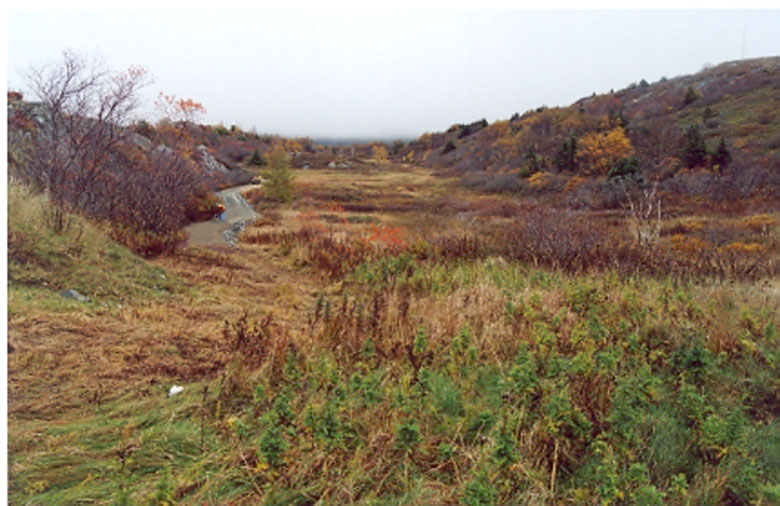
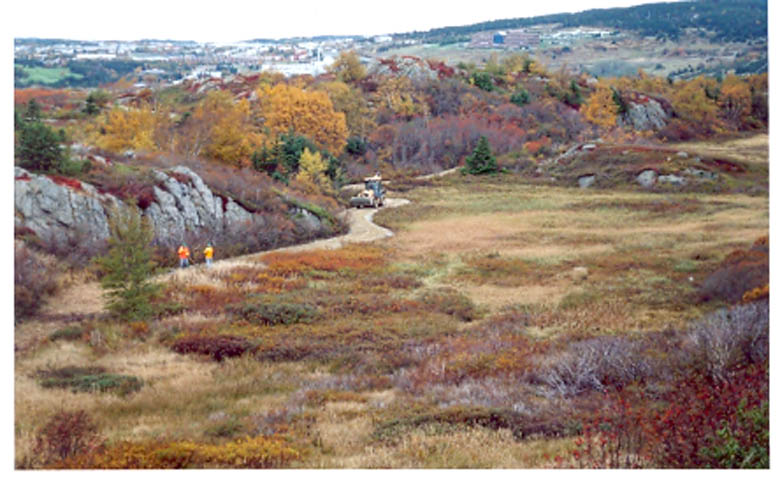
There's a wetland, a fen, on Signal Hill, of significant size that lies in a valley between the Johnson Geo Centre and Signal Hill National Park. Few who have walked or driven up Signal Hill could fail to be moved upon seeing the fall flash of colours, or notice the sweet mélange of bird song drift up from this valley. It is, miraculously, a place as yet untouched by Tim Horton coffee cups, or rocks marked ‘Dave loves Deb.’

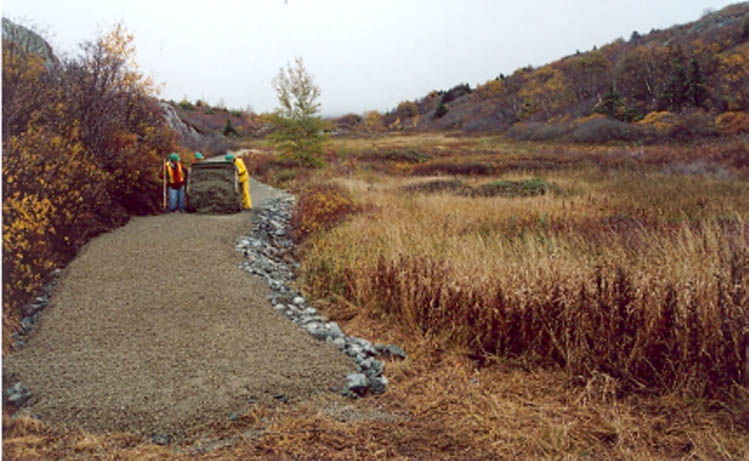
Now, backhoes, stakes, and metre-plus deep crushed rock and gravel are scarring this urban wildspace. Undoubtedly, these other emblems of ‘civilization’ will soon follow.

The sad thing is, this is being done in the name of conserving and enjoying our natural environment. It is being done by a group that has done so much for the City of St. John's: The Johnson Family Foundation and the Grand Concourse Authority. They have brought us about 100km of urban trails, a system that is heavily used and appreciated by residents and visitors.

But there are and should be places that simply do not require, nor should be developed for, a trail system. This extraordinary wetland is one of them. It is a habitat that should never be opened up. Nor is there any need for it. Both the beautiful valley, and its inhabitants, including a variety of water fowl, can be viewed from both Signal Hill Road and the old Burma Road.

This wetland road-grade 'trail' is but one faulty part of a scheme called the Johnson Geo Park that includes miles of wide gravel 'trails,' signage, stoneworks, building facades, lighting, contoured meadows, manmade ponds and water fountains.

I believe that the intent of this Park is for the public good, but I suggest that the advice provided to the JFF is quite poor. Take a piece of urban wilderness, with its outcrops and dense shrubbery, a warren-like age-old maze of tiny paths worn by curious children and others over time and turn it into a hard-surfaced, lit, man-made park. One is left questioning the thought-processes of the architect.

Our own City council and staff might have picked up on the problems - only they no longer have an environmental advisory committee - that's been defunct for the past three or more years.

You know, I love the trails around our City but, well, too much of a good thing, like too much medicine, can be a poison. I think we've found the dosage.


Monday, October 23, 2006

Humanity Living off its credit card


Human Footprint Too Big for Nature

October 24, 2006 - Beijing, China/Gland, Switzerland:

A new report released today by WWF and Global Footprint Network shows that by 2050 humanity will demand twice as much as our planet can supply but that we don't have to follow this path. "How can we live well and live within the means of one planet? This is the main research question of the 21st century," says Dr. Mathis Wackernagel, Executive Director of Global Footprint Network, an international NGO working to make ecological limits central to decision making....

Global Footprint Network, which co-authored the report, calculates that in 2003 humanity's Ecological Footprint was 25 per cent larger than the planet's capacity to produce these resources. This ecological Œovershoot‚ means that it now takes about one year and three months for the Earth to regenerate what we use in a single year. ....

"Humanity is living off its ecological credit card," said Dr. Wackernagel...

But the report goes on to suggest that meeting this challenge may be possible, using scenarios to show two future paths that, in contrast to business-as-usual, could end overshoot and help restore depleted ecosystems and support a healthy biodiversity....

Read entire article in Global Footprint

Thursday, October 19, 2006

Is it a case of you get what you pay for? Am having problem with text editing (fonts, etc.) on this blog. Apologies for tiny text! Alison

Groc & Conf'd


Alison Dyer harkens back to the era of the tiny corner store.

The corner store doesn’t carry things in ones and twos anymore.

It was just the other day, or so it seemed, I made a trip up to my local groc and conf for a couple of smokes – individual, buy-them-one-at-a-time cigarettes you need to get through the day, or to help you cut down. Another family store I remember sold individual band-aids. Aspirin and eggs too, I bet. That one smelled of damp pets and mouldy ceiling tiles on dreary spring days. There was no muzak blaring, just the cadence of Missus behind the counter bantering about the weather or politics with you or Gerry from down the street. There were never more than two customers in the place, unless school was out and the door would set the little bell jangling as long-limbed, droopy-jeaned teenagers stormed in for a quick fat-sugar-salt fix. And time wasn’t wasted looking over a score or a hundred choices of pea soup or chocolate bars. Two, three brands max if you were lucky. And don’t bother checking the expiry date

Now: big box stores. What a concept. What a load. They should offer Airmiles just for visiting, considering all the trudging up and down the aisles and back again because of something missed.

The aisles are so long and high I’m surprised they haven’t called them avenues: Avenue du Pain. Promenade de Poisson. Surprised they haven’t got traffic lights at the major intersections.

Think of all the sale bin items they could have at a red light for pedestrian-shoppers!

Then there’s the muzak. To blank out the whirl of refrigerators, air conditioners and other mechanical grumblings, there’s the mind-numbing muzak. To put me in a happy ‘shopping’ mood.

“I have always imagined a crash in which the only survivor would be the Muzak,” wrote composer Murray Schafer.

What do I know about marketing, but Big Box stores have gone for the kitchen sink, forget about niche. I mean there you are, innocently cruising aisle number 8 with the pasta and cereal and boom! You’re into bath bombs and kitchen gizmos. Turn the corner and you’re looking at colour-coordinated things that would make Debbie Travis turn an unflattering shade of cerise.

And now they’re adding other ‘services’ to mimic different stores – a florist, a photo shop, a dry cleaners, a liquor store, a kitchenware boutique. They’re like a big box mall.

And parking lots! I tell you, you’d better have a damn good memory, like where you parked your car with five thousand SUVs lined up like a backgammon game. The parking lot is like a landing strip, and is devoid of anything idiosyncratic (unless you count how they prune the pathetic seedlings trying to survive on the property fringes).

I’m just lamenting the loss of the ma and pa groc and confs.

I know they’ll soon all be gone, and worse still, revitalized as part of a living museum. But tell me, what’s wrong with wanting just one or two of something?

Alison Dyer is a St. John’s-based writer whose local groc and conf, [that's grocery & confectionary] at the base of Signal Hill, has a ‘for sale’ sign on it.
(Published in The Scope, St. John's alternative newseekly, October12, 2006 http://thescope.ca
URL to article: http://thescope.ca/?p=437

Monday, October 16, 2006

the Sound of fall..


As I get ready for fall...
There’s a fat-petalled wild rose spread out on my Regal Stove, reposing, slumped like a tired flamenco dancer, sweet-smelling, so pink pink against the dirty black metal. Another present from son Ezra who’s pulling wheelies on a friend’s bike on the Cove road. Daughter Ella, barefoot in skimpy orange shorts, is dangling from a poplar tree (having forsaken Artemis Fowl for the moment).

I take the short walk into Hant’s Harbour. Friday evening and the loudest thing is the blaring white of the lighthouse across the harbour at Custard’s Head. Save the occasional ATV. Save the off-key clamour of gulls decorating the crab-plant roof.

Hant’s Harbour is protestant white. As in all the houses are white. Probably take a mayoral declaration or clerical nod to add a brush of colour to a window sash. Sometimes feels like an Angela Lansbury set. Only the place isn’t particularly postcard pretty. No chorus-line of saltbox houses or lobster traps. No knot of old men in woolies and wellies hunched over an old wooden bridge. No, this is a working Newfoundland community. Thank god. Two general stores, a post office, museum, senior’s club, library, (the school was torn down last year) and, on the highway, a gas station with gift shop. It’s far more than pretty.

At Janes’ store, over a single purchase, Muriel and I hold a 10-minute conversation. The weather. This morning a biblical rain, probably spun off from Hurricane Katrina, has us all, once again, thankful that we live in Newfoundland.

Early evening I make my way up over and down the hill to our own craggy piece of paradise in Caplin Cove, and wondering how the sun does that here. A bugger of a day and then the sun throws a bone out over the hillside. Enough to make silver platters out of all the puddles and potholes along Meade Gardens Road, enough to make a hummocky ridge crescendo to silent, standing applause; enough to make the bowl of old green meadows shimmer like a litter of young kittens.

I’m never ready for fall. The very sound of it.
[my editorial column in WORD, newsletter of the Writers' Alliance of N&L, fall 2005 issue. I'm still in Caplin Cove in the summer & whenever I can during the rest of the year. ]


Thursday, October 12, 2006

Maps for Canadians

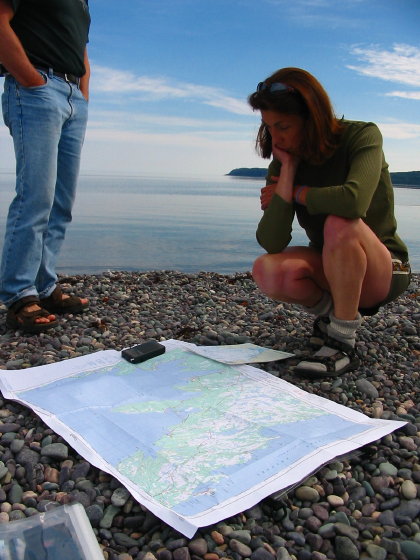
(One happy map user: photo by Jamie Lewis)


Hey, this is a time to rejoice - the federal government has reversed its decision to get out of the paper map making business thanks to hundreds (thousands?) of outdoor enthusiasts who wrote the Minister of Natural Resources and voiced their concern. And to Maps for Canadians, a group that got a good campaign going. Apart from needing those excellent NTS maps for sea kayaking and hiking, I'm going to doubly enjoy pouring over them this winter while planning new water and land trails to explore the coming year.

Had to add this letter that was posted on the Maps for Canadians site - it's wonderful!

From Mo Tipples. Grandmother of 6 in Manitoba, Heart of the Country !
This is the worst email I have ever received ! What an absolute travesty. How can our Government take away such an important educational tool for Canadians to get to know their country and develop pride in its vastness and wonder ? The access by computer in now way compares to having a map on the wall , floor or in hand.The numbers of people without computers is still huge and having attended a seminar on GPS, that is not the answer either. A map is the reference point that travels with you on any travel anywhere.Maps are the way you connect with the earth when you can not get out there on the ground, and more importantly how you connect when you are out there on the ground and in our lovely wilderness areas. Are they trying to discourage us from finding out the hidden details so that the Lumber companies can go rampant ? They are an important learning tool for the young to use , as important as reading a book.My letters will be written and sent.

Saturday, September 30, 2006

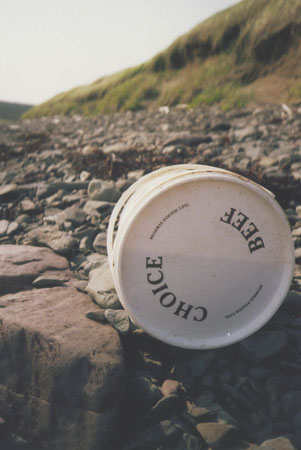
choice beef


Barachois, St. Mary's Bay, NL (photo: Alison Dyer)


Do you really know where your garbage ended up today? Any idea how long it'll stay there? Want to know why we should care? Kayak Newfoundland & Labrador has initiated a beach trash awareness project. And Ocean Net is involving communities in a choice way.

Thursday, September 28, 2006

Where the Spirit Soars


(L'anse au Flamme:
Alison Dyer)


The following is part of an interview with George Schaller, a preeminent field biologist, by John G. Mitchell in Oct.2006 issue of National Geographic:

JMG: Why do we need parks & reserves?

GS: It's essential that each country keep part of its natural heritage untouched, as a record for the future, a baseline to measure change, so people can see the splendor of their past, before the land was degraded. And if we ever want to rehabilitate habitat, we need to see how things used to be. These parks and reserves, these untouched places are also genetic reservoirs, where plants and animals that dan't exist elsewhere still survive. The can be invaluable to the human species as sources of food or medicine. If we destroy the parks, they're gone forever, and we may be losing something invaluable to us.

JMG:And now the Bush Administration and Senator Stevens are looking for a go-ahead to drill for oil on the refuge's coastal plain. How do you feel about that?

GS: It's a warning that you can never give up if you really treasure something. Nothing is safe. About 95 percent of Alaska's North Slope has already been opened for oil leases. Can't we save the rest? What kind of people are we if we don't?...now the oil companies are trying to get into the refuge, because if they can get in there, they can get in anywhere.

GS:....It is tremendously worrisome that we don't talk about nature anymore. We talk about natural resources as if everything had a price tag.


Wednesday, September 27, 2006

scrambling over brambly land


(photo:alison dyer)


Summer studies 1

The children smell of bogwater, spruce bark, wild rose pollen,
pondering equators around planets, fishing questions
scrambling over brambly land,
at night watching slugs mate and stars shoot.

2005 Alison Dyer


I began summer with a night paddle on the solstice in Conception Bay and closed it with a night paddle on the equinox in St. Mary's Bay. Both times we were fortunate to see brilliant bioluminescence. If you've ever paddled in this stuff, seen how it makes fireballs of your paddle blades, and creates streamers of greenish lights as the bow of your kayak breaks the surface, you'll know how magical it appears.

Friday, September 22, 2006

At The Door of the Dragon


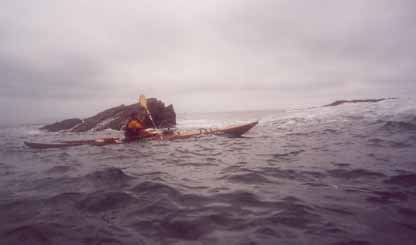
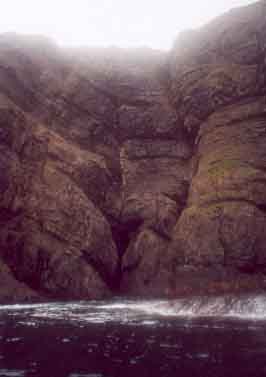
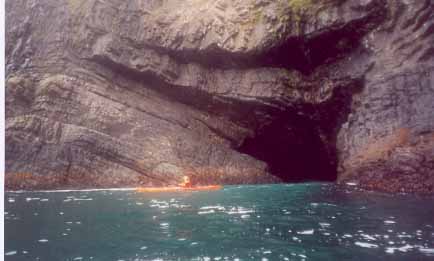
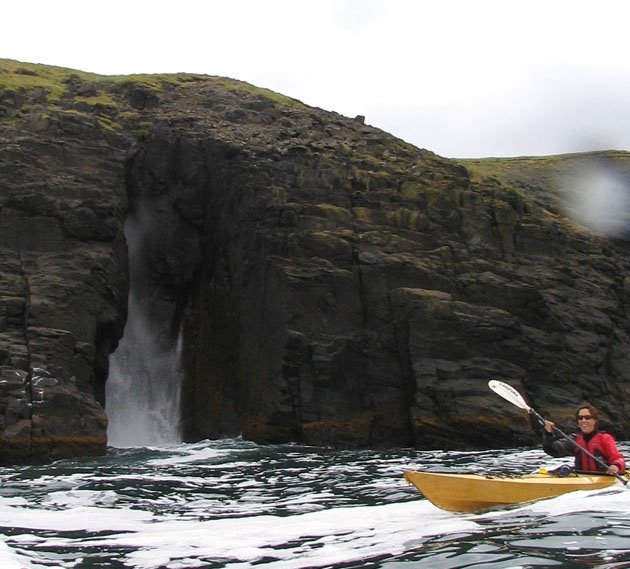
waterfall & cave; cave (photos : Neil Burgess)


waterfall; a swell time (photos: Alison Dyer)
another cave (photo: Neil Burgess)


a 3rd cave, a 4th cave! (photos: Alison Dyer)
boomer; swell play (photos: N.Burgess)


alison before the stack (photo: Neil Burgess)


starting out (photo: Neil Burgess)


For more images, see kayak the rock (go to gallery, click on Neil's St. Vincent's images)

Paddled around Cape English in St. Mary’s Bay, Newfoundland, this past Sunday. Opposite the legendary Cape St. Mary’s. A metre or so of swell with some rebound going out but after rounding the cape, the magic began.

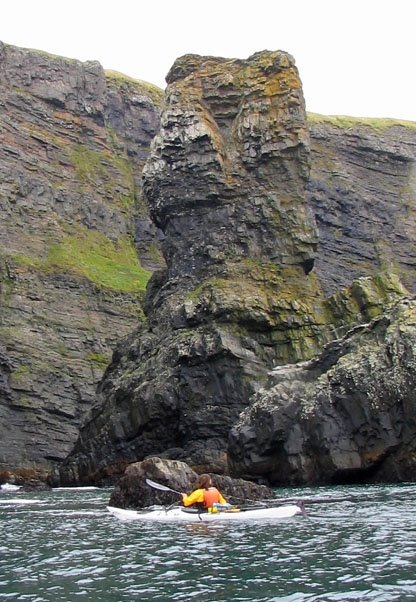
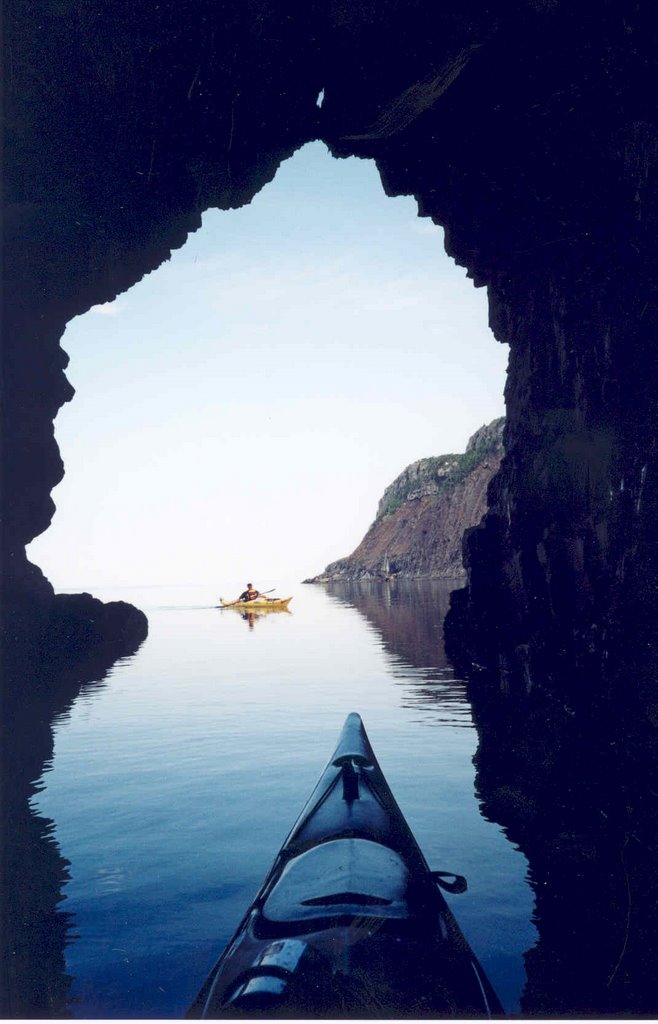
There was an Easter Island quality to the monumental cliffs, steeply dipping beds eroded in large statuesque stacks. (Pat made reference to the Lord of the Rings set.) A huge shining guano rock pulsed out a squadron of elegant cormorants. Enticing rock gardens rose and fell several feet and provided lots of fun. Boomers, blowholes and spouts animated the entire cliffscape. At one, we knew we were at the door of the dragon. Sucking in the swell and spouting out a cloud of spray in a deep sonorous tone. Not far away, another wall revealed an enormous atrium, steeply sided and narrowing toward a dark square cave that seem to go on forever. Pat had a bit of a scare when, exploring the inside, a good swell rumbled down the narrow passage and caught him in the cave.

Outside again, we scared a herd of sunning seals who slipped from their rocks into the water. An osprey glided over the bright green meadow cliff tops. We all agreed it reminded us of the coast of Ireland. Farther on, we almost bumped into a docile sun fish.

This paddle – from its surf launch at St. Vincent’s, to its millpond conclusion at St. Mary’s – was a dream. Pat said it rivaled Chance Cove, and Neil compared it to Little Passage on the south coast. Debbie had a coast to coast grin and Isabelle couldn't get enough play around the rocks. Neither Easter Island, New Zealand, or Ireland, we just found Paradise.

Saturday, September 16, 2006

What's In the potty?


On the national front:

Canada Cuts Kyoto Funding (ENN Sept.15.2006 — By the GLOBE Foundation of Canada)

The Government of Canada has pulled back from a $1.5 million pledge to the
United Nations Climate Change Secretariat to support the Clean Development
Mechanism (CDM). Canada’s contribution towards the administration of the scheme was to have been the largest of any country. The CDM is a system that allows industrialized nations to earn greenhouse gas emissions credits by investing in projects that reduce emissions in developing countries. Industrialized countries can then apply those credits in order to meet emissions targets set under the Kyoto Protocol. The general principle is that emissions reductions are cheaper and easier to achieve in developing countries, where simple investments in energy efficiency or alternative energy technology can yield large cuts. The CDM is recognition of the growing importance of developing nations such as India and China in the fight against climate change.

On the local scene (oh, just choose one! how about...):

Soaring assessments shock St. John's homeowners (CBC News
Sept.13.2006)

An upswing in the St. John's real estate market is hitting residents in
the pocketbook, with double-digit hikes in municipal tax assessments....[residents like Jack Wells saw hikes of 66% CBC reports...I can well believe that - in my neighbourhood, it's well over 70%!] "We're going to have to pay, we're on a fixed income and to us … we're amazed. We don't know what to do," said homeowner Jack Wells, a senior whose property value shot up from $69,000 to $115,000.
Meanwhile, our esteemed Mayor Andy Wells says he can't do anything about it, he knows nothing about the process of assessment "do you?" he asked CBC host Ted Blades, (although these assessors are not at all independent, as Andy would have us believe, but on contract with the City). Another tax grab - I guess that means council salaries will be going up again this year - why do we always have to be so cynical about Andy. I'm sure he's doing it in our best interests!

Thursday, September 14, 2006

Indian Burying Place


A recent blogger thought I was being too 'verbose' and using grand words. Perhaps I should back up and tell you my academic background is in physical geography. And so I will continue to use terms such as erratics, pillow lavas, and other beauties of the landscape. But I'll also post something of the cultural landscape. Last month I had the opportunity to visit Indian Burying Place, an abandoned community on the isolated and exposed western shore of Notre Dame Bay in Newfoundland. You can read my article on same, and other resettled communities, in an upcoming issue of Kanawa (Canada's Paddling magazine).

Wednesday, September 13, 2006

Storm brewed poetry


Erosion: a sonata in c major

Ice.
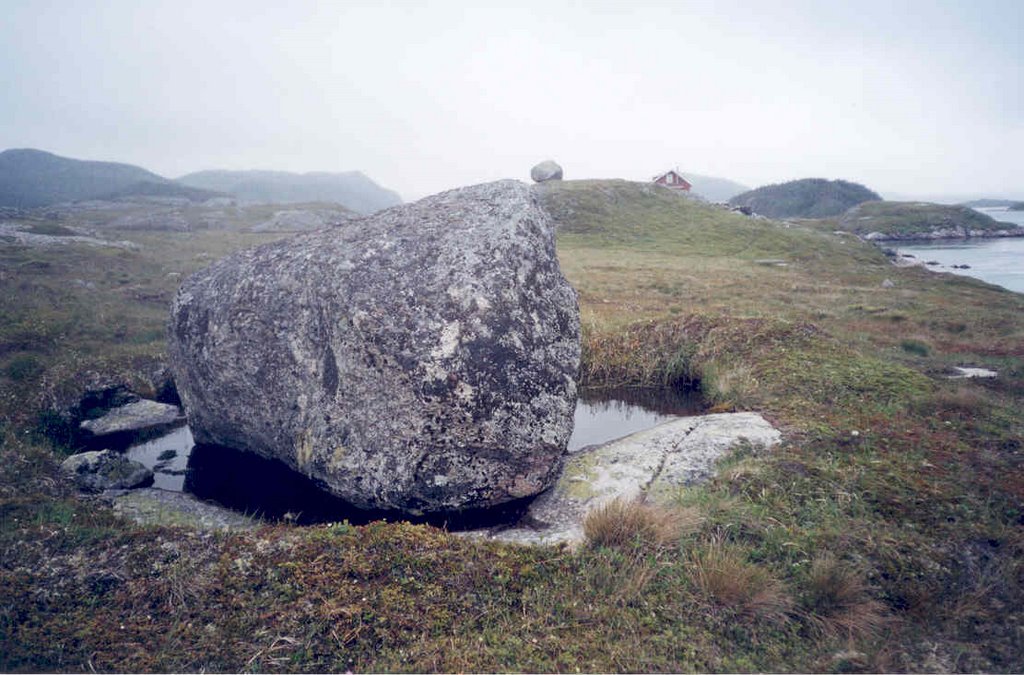
The Isthmus joins the cut-off limbs of two ancient continents. Or rather one continent –Gondwana - with the oceanic floor of Iapetus. And when it’s not shrouded in fog, you can see two bays, one on either side of the Isthmus, crowding it with water, testing its rocky limits. The area is strewn with erratics, boulders that were plucked, carried and dropped by a retreating glacier, the erosive force of glacial ice. Now these erratics perch on rounded highlands, deep base notes grounding an ethereal landscape.

Waves.
From Chance Cove to Western Point at the bottom of Trinity Bay the coastline, a symphony in rock. On a quiet sea, kelp gardens below the cliffs sway a lullaby, cobbled beaches drip arpeggios, and sea caves belch in timpanic splendour. Narrow sea arches, steep and chiseled, sing arias if tuned in a northwesterly.

Wind.
Parabolic, sinuous, curved, blow-out.
Dry, harsh, parched, draining.
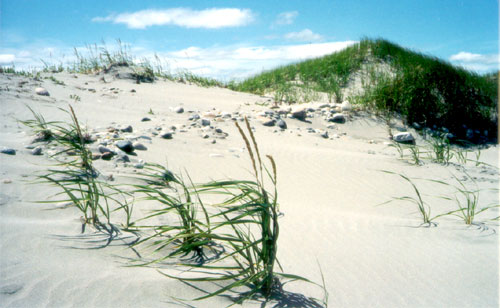
Burgeo Sandbanks, Gooseberry Cove, Windmill Bight. The changing tempo of wind keeps their sand dunes limber, the synergy of granular timbre. These prized spots of erosive excess.

copyright 2005 Alison Dyer
(first published in Newfoundland Quarterly, summer 2005)

Monday, September 11, 2006

Another remarkable summer in Newfoundland


Another remarkable summer in Newfoundland paddling the coastline.

This photo is taken on a hill above the resettled community of Port Anne, or Burnt Island, Placentia Bay.

You can find some of my upcoming articles in Kanawa (paddling to resettled communities) and the Newfoundland Quarterly (some thoughts on industrialization of Placentia Bay). On a different note, two of my short stories, 'Last Call' and 'Products of Erosion,' were published this summer in Grimm Magazine and The Nashwaak Review, respectively.

Back to sea kayaking. Paddled in St. Mary's Bay, Newfoundland on the weekend and met a wonderful elderly gentleman, Clarence Dalton (of the former community of John's Pond). Clarence provided this riddle for us to solve. Have fun, think hard!


Three parts of a cross
One circle all around
Two semi circles and one stroke down
A triangle stood on its feet
Two semi circles and one circle complete

Saturday, February 25, 2006

best kind of a day


Alison Dyer
[writer/audio journalist]


Living at the junction of the icy Labrador current and the balmy gulf stream, I may have a little bit of a different take on life. In this blog I'll be talking about things that interest me: environmental health topics (such as pesticide use on crops and lawns and pthlates in toys and kids clothing); soundscapes of a changing world; kayaking the many bays of Newfoundland; the poetry of a coastline battered by storm waves and bathed in bioluminescence; the surge in Newfoundland literature; local issues like (non-appropriate) development in St. John's, Newfoundland's capital city.