Friday, November 17, 2006


You gotta love this!
CBC Radio Newfoundland/Labrador Interview #3 (Aired Tuesday, Nov 14, 2006)O n the November 14th edition of On The Go, Ted read an email from Paul Johnson, who is head of the Johnson Family Foundation. He was responding to the critics of the Geo Park being constructed behind the Geo Centre on Signal Hill. Here is the text of that email:
1. I expect CBC, as a responsible public service, will add some impartiality and objectivity to what you provide as a platform for people to sanctimoniously criticize good work.
2 . The 35 acres we have on Signal Hill is only 10 % of the total, public-accessible land.
3. Our walks will be public walks, especially dedicated to Signal Hill's amazing geological and botanical interpretation, which is presently unknown to over 95 % of our own people and 100 % of our visitors.
4. We are not damaging the Fen. It is not even within our boundary.
5. Those who say we are ruining natural, public areas, do not remember that much of the land we have leased was expropriated and cleared under Premier Smallwood - - taken from private families that lived there. A large part was also occupied by an orphanage farm, and more by a Royal Navy Supply Base. None of that was "public" land.
6. The GEO CENTRE is committed to improving its property, into highly-beneficial, public interest.
7.Do any of these high-minded, nature-lovers remember the many truckloads of garbage, beer bottles, furniture, mattresses, and car wrecks we had to clear up ?
8. Nobody complained when we spent $ 600,000 to complete the "Lookout Project" for Parks Canada, around Cabot Tower.
9. Nobody complained when we built and paid for the first two Concourse Walks, from Cabot Tower to either end of Quidi Vidi Lake.
10. Ted, while your callers pose as indignant, injured, innocent victims, and champions of privacy and nature, I would hope that you, as host, and many of your listening enthusiasts, will stop to think of how hurtful, discouraging, and destructive are such mean-spirited, one-sided criticisms, for those many people we have, exploring and completing, well-planned, expensive, and difficult initiatives, exclusively for the public good.Paul J. Johnson. {Johnson Insurance Company]
After emailing these insightful points, Paul J. Johnson left for Florida, and we're left wondering if JFF and the Grand Concourse Authority actually know what provincial crown land is, if they know what a fen is since they have clearly put a road through it and why being a nature-lover is bad. Just as Mr. Johnson was given poor advice on the design of the Geo Theme Park, so was he offered poor advice in these conflicting and inaccurate points.
Petition - on defending the fen
Defending the fen - and the wild and historic nature of Signal Hill:
The Johnson Family Foundation & the Grand Concourse Authority continue to bulldoze the hill in the name of 'conservation, geological interpretation.' City Council is mute. So, as citizens, residents, visitors, we have put together this petition, calling for sanity, due process, common courtesy:
http://www.PetitionOnline.com/Geopark/petition.html
Oh, and the ending of well-known writer Susan Rendell's article (The Independent, Nov.17,2006) to keep you smiling through this development nonsense:
"....As far as I know, no one has ever been inspired by an interpretation park to write great literature - or even a limerick. Wait a minute...
There once was a hill, wild and sweet,
Which measured the seasons by feet,
Of children and birds,
Not tourists in herds,
Until its foundation got weak."
Thursday, November 16, 2006
And the name of that place is...
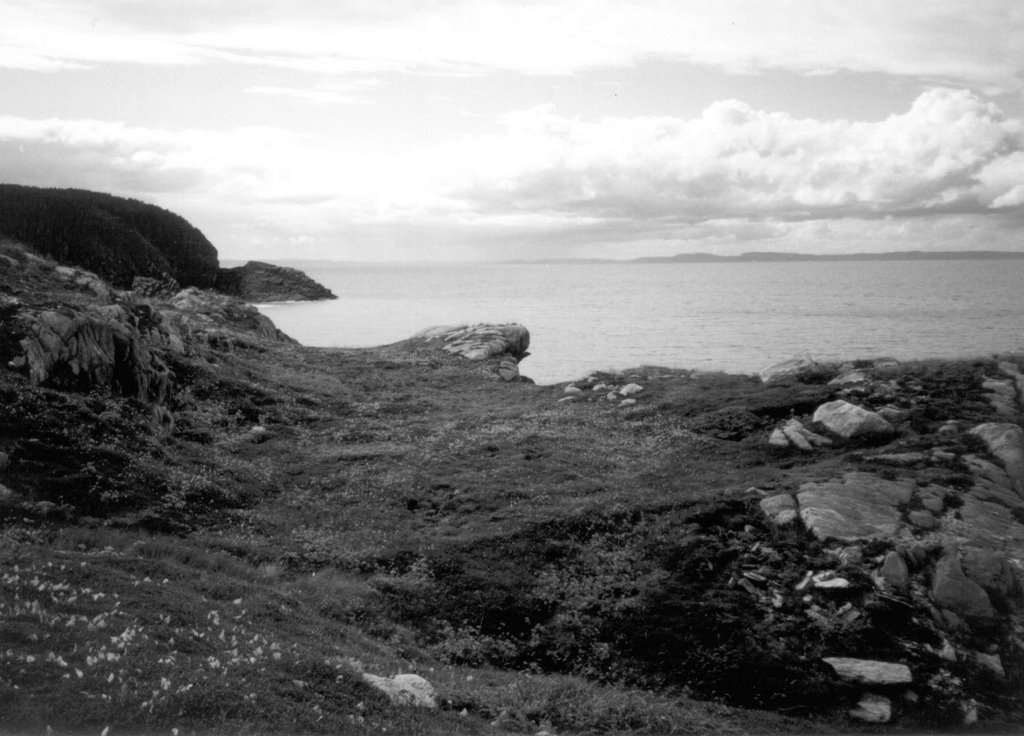
This weekend was spent at my place in Trinity Bay, just a short bald eagle's flight from this photo. (Between shooting his home-made arrows into the garden and on top of the root cellar, my son ran inside to tell me he'd spotted the eagle flying over the cove.)
But where was that last photo taken you ask? Battle Harbour, Labrador.
Stay tuned - I'll be adding more mystery photos on the blog.
Tuesday, November 14, 2006
Rock and water
 Figure a few of you might know where this is. If not, well, hazard a guess.
I missed last couple of days of development nonsense in St. John's while blissfully around the Bay. Apparently Paul Johnson had a spiel on CBC Radio's On the Go. Fill me in. Letters of opposition appeared for several days in both Telegram and Independent while Johnson's anachronistic and inaccurate testament was printed Saturday. Still precious little from the City of St. John's. There's an awful lot of door closing on this one. Hoping people are still interested in prying it open.
Friday, November 10, 2006
a far finer tree
 (Port au Port Peninsula: photo by Alison Dyer)
It's good to take a breather. Many people have spoken out, surprised by the development on Signal Hill. We're going to hear many, many more voices in the coming weeks. But I want you to take a breather, enjoy some other images and ideas.
I was in Labrador - Goose Bay/Happy Valley - this past week on assignment. I was fortunate enough to also make visits to North West River and Sheshatshit, places I have not been, well, for a very long time. The moon was full, the air heavy with the scent of wood smoke. I don't have photos of these places ready to post yet. But some good memories already of meeting people such as Angela Andrew who makes Innu Tea Dolls and is always ready to learn new ways of doing things - Angela had a caribou hide drying behind her wood stove, and a year-old bright star testing her grandmother's patience. And Sylvia Blake, a trapper's daughter who grew up in place called, of all wonderful names, Butter and Snow, who gardens all manner of vegetables in her Labrador soil.
Friday, November 03, 2006
Time for a little sanity
 Signal Hill North Head Trail (photo: Alison Dyer) - a ledge between worlds waiting to be explored.
But one person wants a chunk of this historic hill manicured and riddled with road-sized 'trails,' to intrude upon and remove precious wetlands, create man-made ponds with fountains, build miniatures of historic sites. Is this really wanted, on Signal Hill?
What can you do?
Voice your concern. Write City Council, Paul Johnson, a letter to the editor. Here's a list to get you going:
1. Johnson Family Foundation, Paul Johnson: 95 Elizabeth Avenue, St. John's
p: 737-1503 fax:737-1667
2. Grand Concourse Authority, Addison Bown, ex.dir.mailto:ex.dir.info@grandconcourse.ca
3.City Council
Mayor Andy Wells andywells@stjohns.ca
Deputy Mayor Dennis O'Keefe dokeefe@stjohns.ca
Councillor Art Puddister APuddister@stjohns.ca
Frank Galgay fgalgay@stjohns.ca (Chairs City Parks cttee)
Keith Coombs kcoombs@stjohns.ca
Ron Ellsworth shickman@stjohns.ca
Wally Collins wcollins@stjohns.ca
Gerry Colbert gcolbert@stjohns.ca
Shannie Duff sduff@stjohns.ca
Tom Hann THann@stjohns.ca
Sandy Hickman shickman@stjohns.ca
4. Lorraine Michael, MHA Signal Hill Quidi Vidi 739-6387 info@nl.ndp.ca
5. Media
The Telegram letters@thetelegram.com
The Independent stephanie.porter@theindependent.ca
CBC Radio - On the Go - 576-5270, toll free in province at 1-800-465-6846
VOCM openline@vocm.com
Wednesday, November 01, 2006
From Mayor Well's "What's all the fuss about," to Addison Bown's...you better read it - you'd never believe me
 Dear readers - I promised you some transcripts from CBC Radio's coverage of developments on Signal Hill. Here are two recent pieces from On the Go:
Transcript of CBC Radio One’s On the Go: Monday Oct. 30/06
[Ted Blades]… Signal Hill that the locals call the fen. It lies in 40acres of bog, bush and rock behind the Johnson Geo Centre, a series of trails, interpretive points and other Grand Concourse type stuff are under construction up there, now. I was up there Friday morning with Ray Cox who lives and works in the area. As the backhoes and ATV’s were busily hauling gravel around us, I asked him why he opposed this development. Here’s some of what he had to say.
RC: Well, I guess the first thing is I liked the Hill the way it was, it was just a natural hillside, and that was the beauty of it for so many people, that they could come here & pick berries and basically be in St. john’s but be away from everything.
TB: what role does having a wild space, a space that’s not been converted, so it is accessible by all, by the elderly by people in wheelchairs….what role is there for untamed spaces in a city landscape?
RC: ..I think there’s a certain connection with nature….even the other day I was up here with my dog and took a long look at the valley, and thought how beautiful it was in all its fall colours and the next day I came through and there was a road down the side of it, right through the valley itself. It was shocking to see that kind of change in basically a wetland area and watershed area.
TB: When did you first find out that this is what was happening here?
RC: Through the summer I’ve seen stakes go up and for sometime I’ve seen some of the early development of the trails. I was away for the month of August, I came back and half of a pond was gone, a parking lot was put in its place, and a new road was cut through – adding a third road off the Geo Centre into the area near the Battery Hotel. I’m not against the development of an interpretative area around the Geo Centre….to basically take a public area – this was all crown land - I considered that I was one of the owners of the place, turn it into a big urban park without anybody knowing about it or asking anybody what we felt about it, it just seems to fly in the face of what should be going on. And again, this is significant acreage. This is Signal Hill, this is an iconic place in the City, in the province, and beyond. For this kind of development there should have been at least some kind of public consultation – let us know what you propose and let us comment on it.
TB: That was Ray Cox on Friday’s On to Go. This morning I called the mayor of St. John’s Andy Wells and asked him amongst other questions how and when this project was approved by City Council. Here’s what he told me.
AW: It came before Council I think earlier this fall, I don’t know how long ago it was. It’s in Signal Hill Park, it’s a project being done by the Geo Centre, it’s a permitted use in the area, and there’s not a thing wrong with it as far as I can see.
TB: Was that discussed or presented at private meeting or public meeting?
AW: It was the one mistake we made certainly procedurally…because it involved an arrangement between ourselves and the Grand Concourse, we did do it at a private meeting, but it should not have been done at a private meeting, that was a mistake, I take responsibility for that. We should have done it at a public meeting, but when it came before me at a private meeting, given that it was a permitted use and given that you’re upgrading or doing work on an open space, I mean I couldn’t see what, it just didn’t twig to me that people would be even opposed to it. But obviously with hindsight, yes, it should have been done. There’s nothing to hide or be hidden from the people, and I’ve reviewed the plan with our director of engineering and I can’t see what the fuss is all about.
TB: The people that I have talked to have felt that, they’re opposed to it, they want it left in a more wild state, but the very least said there should have been some public input.
AW: They’re probably right on that one. That’s our fault, I can’t argue that. It wasn’t deliberate but given the fact that it was a permitted use, because it is within the mandate of I guess a National Park, and we didn’t see any environmental problems with it. I think some people are concerned about the width of the road that’s there?
TB: yes
AW: but that’s only temporary while the work is going to be done I believe.
TB: I spoke to Paul Johnson about that on Friday and he said they’re going to be dropped back down from the 10 foot wide roads that they are now to 6 foot paths that they are in other parts of the Grand Concourse.
AW: I don’t know what the concern is! There’s nothing going to be destroyed. What’s going to be destroyed? We have an environmental bylaw, we have regulations, and I mean we follow the law, we don’t break the law.
TB: I guess their argument is, is there no room in the City landscape for wild space as opposed to stuff that’s been gentrified?
AW: Well I think gentrified is kind of a pretentious term and rather a pretentious criticism. I think what we’ve done with our open space and our parks around the City is uh, we haven’t in anyway compromised the environment, and, people seem to forget that there’s 4,000 hectares of open space undeveloped in the City of St. John’s called Pippy Park, there’s a huge area. Plus if you want to look at a map of the City of St. John’s, aside from Pippy Park, there are huge open space areas in this City that are not going to be developed and never will be. I don’t understand what people are so upset about.
TB: Who owns that land now?
AW: The National Park isn’t it?
TB: No, it’s outside the National Park. My understanding, and this is third-hand information, that this was provincial crown land that through some assistance of the City has now been transferred to the Grand Concourse.
AW: Well, maybe so. It is not owned by the federal government, certainly owned by the provincial government, not owned by us. So therefore it would be provincial crown land. And I guess we jointly or the province or ourselves deeded it over to the Grand Concourse.
TB: When I talked to Paul Johnson in the parking lot of the Geo Centre on Friday, he said that if they stopped to consult the public at every step they’d never get anything done. What do you make of that sentiment?
AW: I don’t think I can agree with that. I think that people are entitled to have input. We’re pretty careful here, this was certainly an oversight on our part, but I mean I think the citizens of St. John’s have a right to be consulted about how their open spaces are developed. With this exception, all of these things go to the public chamber of the City, and there is certainly an opportunity for public discussion, public debate, this was as I say an oversight.
TB: The next time something like this happens it’ll be in public?
AW: Well, yeah, I’m certainly alert to it now. It’ll never happen again as far as I’m concerned. But I can’t say it won’t happen. But it’ll never happen again ‘cause I’m concerned. I mean it wasn’t deliberate. And I mean we’ve gotten, what, I’ve had two calls on it. My impression is that there’s not a lot of public opposition. Not just because there’s two doesn’t mean their criticism isn’t valid, it’s not a numbers game. But when I got a call first from Ray Cox, I did go down and meet with our director of engineering who’s supervising the project*, brief me with what’s going on, and I cannot honestly say that I would have done anything different. I mean I don’t know what the problem is. We’re building a little trail that people can walk on. We’re not going to undermine the integrity of the adjacent open space. The bog is there but I don’t know how significant it is, but in any event it’s not going to be destroyed. So what is all the fuss about, one has to ask?
TB: Mayor Wells, I want to thank you for your time.
AW: Okay.
Transcript of CBC Radio One’s On the Go: Tuesday, Oct.31/06
Host Ted Blades:…a series of trails, interpretative points and other structures, maybe even some fountains are being built up there by the Grand Concourse Authority. Our coverage of this development has prompted an email from Bob Gendron who writes in part: “I heard you talking with the Mayor [Andy Wells] on Monday’s show. I appreciate his admitting the project should have gone through public consultation. However, I am still concerned about the bog and I have two straightforward, and as yet, unanswered questions. One: what evidence does the City have that the pathways built on and around the fen will not upset the hydrology, pH balance, and sediment input and output of the bog? And Two: was this ever studied or assessed by qualified individuals having knowledge of ecosystems of isolated bogs? As I understand it – Mr. Gendron goes on to say – raised wooden boardwalks should be used to prevent blockages of water flow and avoid the leaching of harsh chemicals that can occur out of gravel and fill and thus possibly lead to damaging the bog. A perched bog such as this, in the hollow of a hill, is even more special. If these questions have not been answered and cannot be answered now, then I suggest it should be assessed before further work is done in the bog area. And again, that email is from On the Go listener Bob Gendron.
Now, I spoke with Addison Bown, the head of the Grand Concourse Authority earlier today to request an interview to address these questions. He said he’d take a look at them and get back to me, so I emailed them off to him. When he called back this afternoon, he said the questions are not worth responding to.
I asked him if an environmental assessment had been done before this project was undertaken.
“For what?” He said. To see if the trails and such would have an impact on the fen, I replied.
“Don’t they know,” said Mr. Bown, “that all the water off the roof of the Geo Centre runs into the fen, no one’s had a problem with that. And as far as the pH balance goes, that’s acid. Don’t these people know that all the bogs were ponds once and will be land again. How deep do these people dig I wonder before they start barking for lack of a better word.”
Mr. Bown concluded by saying he’d welcome an email from Mr. Gendron and would gladly respond to him, but he’s not going to talk about this project on the radio anymore. He said: “I’d be glad to talk to you about any other story any other time, but that there’s been enough coverage on this one.”
So where gentle listener should we go? Should we leave it alone as Mr. Bown says or is there somewhere else we should take it? Your advice, comments, suggestions, always welcome. Talkback’s number is 576-5207 in the City, anywhere else it’s a toll-free number, 1-800-465-6846. Our email address is
onthego@cbc.ca.TB: The people that I have talked to have felt that, they’re opposed to it, they want it left in a more wild state, but the very least said there should have been some public input.
AW: They’re probably right on that one. That’s our fault, I can’t argue that. It wasn’t deliberate but given the fact that it was a permitted use, because it is within the mandate of I guess a National Park, and we didn’t see any environmental problems with it. I think some people are concerned about the width of the road that’s there?
TB: yes
AW: but that’s only temporary while the work is going to be done I believe.
TB: I spoke to Paul Johnson about that on Friday and he said they’re going to be dropped back down from the 10 foot wide roads that they are now to 6 foot paths that they are in other parts of the Grand Concourse.
AW: I don’t know what the concern is! There’s nothing going to be destroyed. What’s going to be destroyed? We have an environmental bylaw, we have regulations, and I mean we follow the law, we don’t break the law.
TB: I guess their argument is, is there no room in the City landscape for wild space as opposed to stuff that’s been gentrified?
AW: Well I think gentrified is kind of a pretentious term and rather a pretentious criticism. I think what we’ve done with our open space and our parks around the City is uh, we haven’t in anyway compromised the environment, and, people seem to forget that there’s 4,000 hectares of open space undeveloped in the City of St. John’s called Pippy Park, there’s a huge area. Plus if you want to look at a map of the City of St. John’s, aside from Pippy Park, there are huge open space areas in this City that are not going to be developed and never will be. I don’t understand what people are so upset about.
TB: Who owns that land now?
AW: The National Park isn’t it?
TB: No, it’s outside the National Park. My understanding, and this is third-hand information, that this was provincial crown land that through some assistance of the City has now been transferred to the Grand Concourse.
AW: Well, maybe so. It is not owned by the federal government, certainly owned by the provincial government, not owned by us. So therefore it would be provincial crown land. And I guess we jointly or the province or ourselves deeded it over to the Grand Concourse.
TB: When I talked to Paul Johnson in the parking lot of the Geo Centre on Friday, he said that if they stopped to consult the public at every step they’d never get anything done. What do you make of that sentiment?
AW: I don’t think I can agree with that. I think that people are entitled to have input. We’re pretty careful here, this was certainly an oversight on our part, but I mean I think the citizens of St. John’s have a right to be consulted about how their open spaces are developed. With this exception, all of these things go to the public chamber of the City, and there is certainly an opportunity for public discussion, public debate, this was as I say an oversight.
TB: The next time something like this happens it’ll be in public?
AW: Well, yeah, I’m certainly alert to it now. It’ll never happen again as far as I’m concerned. But I can’t say it won’t happen. But it’ll never happen again ‘cause I’m concerned. I mean it wasn’t deliberate. And I mean we’ve gotten, what, I’ve had two calls on it. My impression is that there’s not a lot of public opposition. Not just because there’s two doesn’t mean their criticism isn’t valid, it’s not a numbers game. But when I got a call first from Ray Cox, I did go down and meet with our director of engineering who’s supervising the project*, brief me with what’s going on, and I cannot honestly say that I would have done anything different. I mean I don’t know what the problem is. We’re building a little trail that people can walk on. We’re not going to undermine the integrity of the adjacent open space. The bog is there but I don’t know how significant it is, but in any event it’s not going to be destroyed. So what is all the fuss about, one has to ask?
TB: Mayor Wells, I want to thank you for your time.
AW: Okay.
Transcript of CBC Radio One’s On the Go: Tuesday, Oct.31/06
Host Ted Blades:…a series of trails, interpretative points and other structures, maybe even some fountains are being built up there by the Grand Concourse Authority. Our coverage of this development has prompted an email from Bob Gendron who writes in part: “I heard you talking with the Mayor [Andy Wells] on Monday’s show. I appreciate his admitting the project should have gone through public consultation. However, I am still concerned about the bog and I have two straightforward, and as yet, unanswered questions. One: what evidence does the City have that the pathways built on and around the fen will not upset the hydrology, pH balance, and sediment input and output of the bog? And Two: was this ever studied or assessed by qualified individuals having knowledge of ecosystems of isolated bogs? As I understand it – Mr. Gendron goes on to say – raised wooden boardwalks should be used to prevent blockages of water flow and avoid the leaching of harsh chemicals that can occur out of gravel and fill and thus possibly lead to damaging the bog. A perched bog such as this, in the hollow of a hill, is even more special. If these questions have not been answered and cannot be answered now, then I suggest it should be assessed before further work is done in the bog area. And again, that email is from On the Go listener Bob Gendron.
Now, I spoke with Addison Bown, the head of the Grand Concourse Authority earlier today to request an interview to address these questions. He said he’d take a look at them and get back to me, so I emailed them off to him. When he called back this afternoon, he said the questions are not worth responding to.
I asked him if an environmental assessment had been done before this project was undertaken.
“For what?” He said. To see if the trails and such would have an impact on the fen, I replied.
“Don’t they know,” said Mr. Bown, “that all the water off the roof of the Geo Centre runs into the fen, no one’s had a problem with that. And as far as the pH balance goes, that’s acid. Don’t these people know that all the bogs were ponds once and will be land again. How deep do these people dig I wonder before they start barking for lack of a better word.”
Mr. Bown concluded by saying he’d welcome an email from Mr. Gendron and would gladly respond to him, but he’s not going to talk about this project on the radio anymore. He said: “I’d be glad to talk to you about any other story any other time, but that there’s been enough coverage on this one.”
So where gentle listener should we go? Should we leave it alone as Mr. Bown says or is there somewhere else we should take it? Your advice, comments, suggestions, always welcome. Talkback’s number is 576-5207 in the City, anywhere else it’s a toll-free number, 1-800-465-6846. Our email address is
[bolded by me, squidink. Also, re *, at time of my meeting with City one week ago, none of engineering/planning staff had even visited site to see what was going on]
Tuesday, October 31, 2006
I'm sorry.... we should have consulted the public

There's something about sincere apologies. Others, well....
Listen to CBC Radio One's On the Go host Ted Blades' Monday Oct. 30th interview with Mayor Andy Wells on how due diligence and standard procedure was, somehow, forgotten in a private meeting held in August.
Are you convinced this will not happen again?
The audio feature will be up later today. Meanwhile, click on On to Go's audio feature of Oct.27th to hear an interview with resident Ray Cox and comments by Paul Johnson, the proponent of the Johnson Geo Park.
Friday, October 27, 2006
Defending the fen - part 2

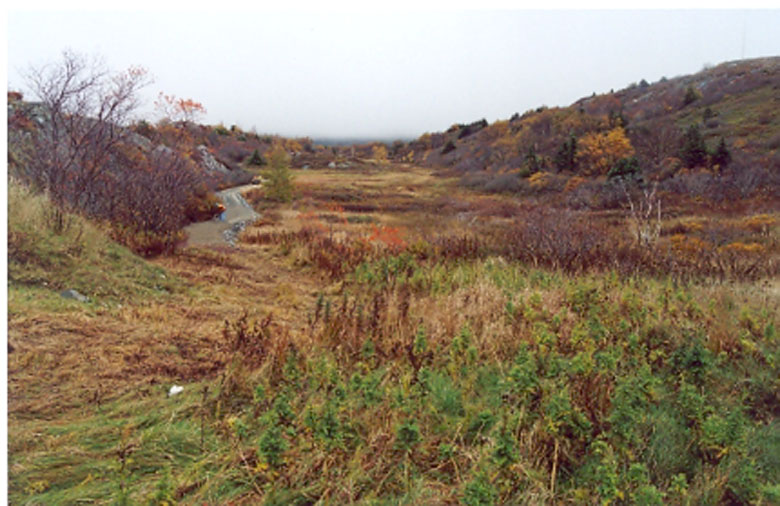
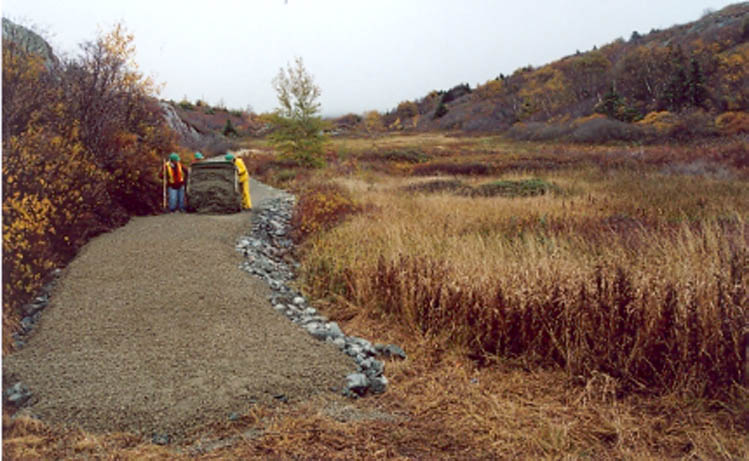

I've received lots of emails from concerned residents of the City of St. John's, from nearby communities, as well as from people who visit the City and live outside the province and country. There's an overwhelming sense of dismay because all recognize the good works that the JFF and Grand Concourse have done for this City.
I urge you to leave your thoughts on this blog, and also contact City Council and the Grand Concourse Authority.
I urge you to leave your thoughts on this blog, and also contact City Council and the Grand Concourse Authority.
From the GCA website:
Tell us about your walks. Were there things you particularly liked? Disliked? Any things you'd like to see changed? Any problems or concerns about your walk? Of just let us know what you think of our Web site... we're always working to make things better!
Let's build on this offer to dialogue, and email them at: input@grandconcourse.ca
Let's build on this offer to dialogue, and email them at: input@grandconcourse.ca
COMMENTS: PLease leave a comment - what are your concerns about the fen, and ideas for this Johnson Geo Park - on this blog - just click on comments below.
Thursday, October 26, 2006
defending a fen
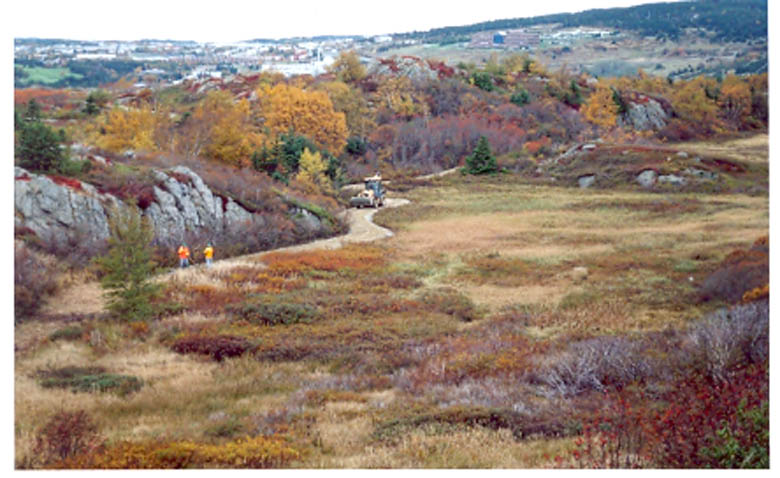
 Johnson Geo Park, submitted to St.John's City Council
Small wild spaces in the city are rare. For that alone, they should be heralded, celebrated, defended. Some are so beautiful, one can't imagine anything ever happening to them.
There's a wetland, a fen, on Signal Hill, of significant size that lies in a valley between the Johnson Geo Centre and Signal Hill National Park. Few who have walked or driven up Signal Hill could fail to be moved upon seeing the fall flash of colours, or notice the sweet mélange of bird song drift up from this valley. It is, miraculously, a place as yet untouched by Tim Horton coffee cups, or rocks marked ‘Dave loves Deb.’
Now, backhoes, stakes, and metre-plus deep crushed rock and gravel are scarring this urban wildspace. Undoubtedly, these other emblems of ‘civilization’ will soon follow.
The sad thing is, this is being done in the name of conserving and enjoying our natural environment. It is being done by a group that has done so much for the City of St. John's: The Johnson Family Foundation and the Grand Concourse Authority. They have brought us about 100km of urban trails, a system that is heavily used and appreciated by residents and visitors.
But there are and should be places that simply do not require, nor should be developed for, a trail system. This extraordinary wetland is one of them. It is a habitat that should never be opened up. Nor is there any need for it. Both the beautiful valley, and its inhabitants, including a variety of water fowl, can be viewed from both Signal Hill Road and the old Burma Road.
This wetland road-grade 'trail' is but one faulty part of a scheme called the Johnson Geo Park that includes miles of wide gravel 'trails,' signage, stoneworks, building facades, lighting, contoured meadows, manmade ponds and water fountains.
I believe that the intent of this Park is for the public good, but I suggest that the advice provided to the JFF is quite poor. Take a piece of urban wilderness, with its outcrops and dense shrubbery, a warren-like age-old maze of tiny paths worn by curious children and others over time and turn it into a hard-surfaced, lit, man-made park. One is left questioning the thought-processes of the architect.
Our own City council and staff might have picked up on the problems - only they no longer have an environmental advisory committee - that's been defunct for the past three or more years.
You know, I love the trails around our City but, well, too much of a good thing, like too much medicine, can be a poison. I think we've found the dosage.
Monday, October 23, 2006
Humanity Living off its credit card
Human Footprint Too Big for Nature
October 24, 2006 - Beijing, China/Gland, Switzerland:
A new report released today by WWF and Global Footprint Network shows that by 2050 humanity will demand twice as much as our planet can supply but that we don't have to follow this path. "How can we live well and live within the means of one planet? This is the main research question of the 21st century," says Dr. Mathis Wackernagel, Executive Director of Global Footprint Network, an international NGO working to make ecological limits central to decision making....
Global Footprint Network, which co-authored the report, calculates that in 2003 humanity's Ecological Footprint was 25 per cent larger than the planet's capacity to produce these resources. This ecological Œovershoot‚ means that it now takes about one year and three months for the Earth to regenerate what we use in a single year. ....
"Humanity is living off its ecological credit card," said Dr. Wackernagel...
But the report goes on to suggest that meeting this challenge may be possible, using scenarios to show two future paths that, in contrast to business-as-usual, could end overshoot and help restore depleted ecosystems and support a healthy biodiversity....
Read entire article in Global Footprint
Thursday, October 19, 2006
Groc & Conf'd

The corner store doesn’t carry things in ones and twos anymore.
It was just the other day, or so it seemed, I made a trip up to my local groc and conf for a couple of smokes – individual, buy-them-one-at-a-time cigarettes you need to get through the day, or to help you cut down. Another family store I remember sold individual band-aids. Aspirin and eggs too, I bet. That one smelled of damp pets and mouldy ceiling tiles on dreary spring days. There was no muzak blaring, just the cadence of Missus behind the counter bantering about the weather or politics with you or Gerry from down the street. There were never more than two customers in the place, unless school was out and the door would set the little bell jangling as long-limbed, droopy-jeaned teenagers stormed in for a quick fat-sugar-salt fix. And time wasn’t wasted looking over a score or a hundred choices of pea soup or chocolate bars. Two, three brands max if you were lucky. And don’t bother checking the expiry date
Now: big box stores. What a concept. What a load. They should offer Airmiles just for visiting, considering all the trudging up and down the aisles and back again because of something missed.
The aisles are so long and high I’m surprised they haven’t called them avenues: Avenue du Pain. Promenade de Poisson. Surprised they haven’t got traffic lights at the major intersections.
Think of all the sale bin items they could have at a red light for pedestrian-shoppers!
Then there’s the muzak. To blank out the whirl of refrigerators, air conditioners and other mechanical grumblings, there’s the mind-numbing muzak. To put me in a happy ‘shopping’ mood.
“I have always imagined a crash in which the only survivor would be the Muzak,” wrote composer Murray Schafer.
What do I know about marketing, but Big Box stores have gone for the kitchen sink, forget about niche. I mean there you are, innocently cruising aisle number 8 with the pasta and cereal and boom! You’re into bath bombs and kitchen gizmos. Turn the corner and you’re looking at colour-coordinated things that would make Debbie Travis turn an unflattering shade of cerise.
And now they’re adding other ‘services’ to mimic different stores – a florist, a photo shop, a dry cleaners, a liquor store, a kitchenware boutique. They’re like a big box mall.
And parking lots! I tell you, you’d better have a damn good memory, like where you parked your car with five thousand SUVs lined up like a backgammon game. The parking lot is like a landing strip, and is devoid of anything idiosyncratic (unless you count how they prune the pathetic seedlings trying to survive on the property fringes).
I’m just lamenting the loss of the ma and pa groc and confs.
I know they’ll soon all be gone, and worse still, revitalized as part of a living museum. But tell me, what’s wrong with wanting just one or two of something?
Alison Dyer is a St. John’s-based writer whose local groc and conf, [that's grocery & confectionary] at the base of Signal Hill, has a ‘for sale’ sign on it.
(Published in The Scope, St. John's alternative newseekly, October12, 2006 http://thescope.ca
URL to article: http://thescope.ca/?p=437
URL to article: http://thescope.ca/?p=437
Monday, October 16, 2006
the Sound of fall..
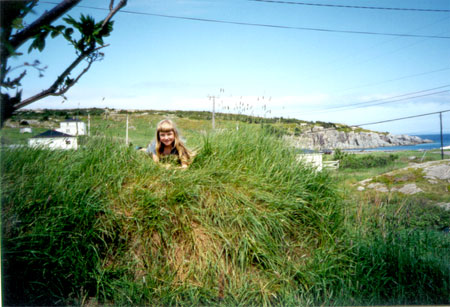

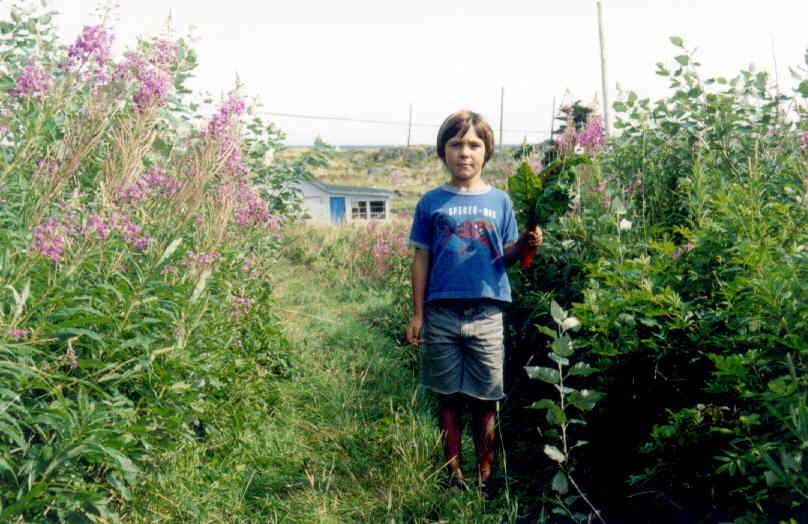

As I get ready for fall...
There’s a fat-petalled wild rose spread out on my Regal Stove, reposing, slumped like a tired flamenco dancer, sweet-smelling, so pink pink against the dirty black metal. Another present from son Ezra who’s pulling wheelies on a friend’s bike on the Cove road. Daughter Ella, barefoot in skimpy orange shorts, is dangling from a poplar tree (having forsaken Artemis Fowl for the moment).
I take the short walk into Hant’s Harbour. Friday evening and the loudest thing is the blaring white of the lighthouse across the harbour at Custard’s Head. Save the occasional ATV. Save the off-key clamour of gulls decorating the crab-plant roof.
Hant’s Harbour is protestant white. As in all the houses are white. Probably take a mayoral declaration or clerical nod to add a brush of colour to a window sash. Sometimes feels like an Angela Lansbury set. Only the place isn’t particularly postcard pretty. No chorus-line of saltbox houses or lobster traps. No knot of old men in woolies and wellies hunched over an old wooden bridge. No, this is a working Newfoundland community. Thank god. Two general stores, a post office, museum, senior’s club, library, (the school was torn down last year) and, on the highway, a gas station with gift shop. It’s far more than pretty.
At Janes’ store, over a single purchase, Muriel and I hold a 10-minute conversation. The weather. This morning a biblical rain, probably spun off from Hurricane Katrina, has us all, once again, thankful that we live in Newfoundland.
Early evening I make my way up over and down the hill to our own craggy piece of paradise in Caplin Cove, and wondering how the sun does that here. A bugger of a day and then the sun throws a bone out over the hillside. Enough to make silver platters out of all the puddles and potholes along Meade Gardens Road, enough to make a hummocky ridge crescendo to silent, standing applause; enough to make the bowl of old green meadows shimmer like a litter of young kittens.
I’m never ready for fall. The very sound of it.
[my editorial column in WORD, newsletter of the Writers' Alliance of N&L, fall 2005 issue. I'm still in Caplin Cove in the summer & whenever I can during the rest of the year. ]
Thursday, October 12, 2006
Maps for Canadians
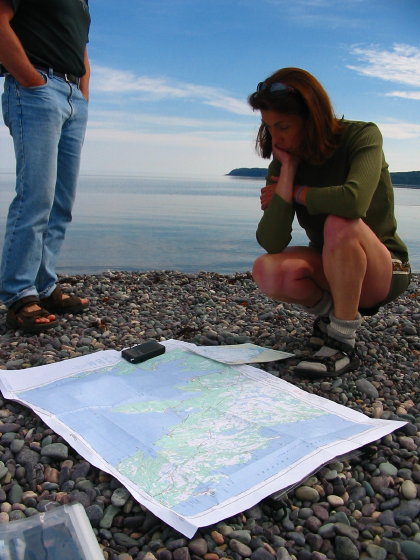
Hey, this is a time to rejoice - the federal government has reversed its decision to get out of the paper map making business thanks to hundreds (thousands?) of outdoor enthusiasts who wrote the Minister of Natural Resources and voiced their concern. And to Maps for Canadians, a group that got a good campaign going. Apart from needing those excellent NTS maps for sea kayaking and hiking, I'm going to doubly enjoy pouring over them this winter while planning new water and land trails to explore the coming year.
Had to add this letter that was posted on the Maps for Canadians site - it's wonderful!
From Mo Tipples. Grandmother of 6 in Manitoba, Heart of the Country !
This is the worst email I have ever received ! What an absolute travesty. How can our Government take away such an important educational tool for Canadians to get to know their country and develop pride in its vastness and wonder ? The access by computer in now way compares to having a map on the wall , floor or in hand.The numbers of people without computers is still huge and having attended a seminar on GPS, that is not the answer either. A map is the reference point that travels with you on any travel anywhere.Maps are the way you connect with the earth when you can not get out there on the ground, and more importantly how you connect when you are out there on the ground and in our lovely wilderness areas. Are they trying to discourage us from finding out the hidden details so that the Lumber companies can go rampant ? They are an important learning tool for the young to use , as important as reading a book.My letters will be written and sent.
Saturday, September 30, 2006
choice beef
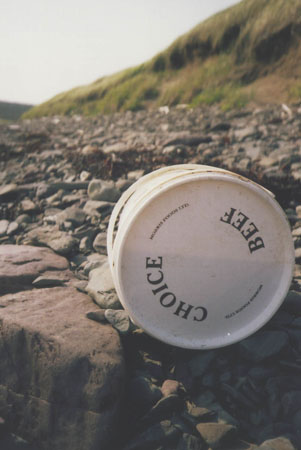
Barachois, St. Mary's Bay, NL (photo: Alison Dyer)
Do you really know where your garbage ended up today? Any idea how long it'll stay there? Want to know why we should care? Kayak Newfoundland & Labrador has initiated a beach trash awareness project. And Ocean Net is involving communities in a choice way.
Thursday, September 28, 2006
Where the Spirit Soars

(L'anse au Flamme:
Alison Dyer)
The following is part of an interview with George Schaller, a preeminent field biologist, by John G. Mitchell in Oct.2006 issue of National Geographic:
JMG: Why do we need parks & reserves?
GS: It's essential that each country keep part of its natural heritage untouched, as a record for the future, a baseline to measure change, so people can see the splendor of their past, before the land was degraded. And if we ever want to rehabilitate habitat, we need to see how things used to be. These parks and reserves, these untouched places are also genetic reservoirs, where plants and animals that dan't exist elsewhere still survive. The can be invaluable to the human species as sources of food or medicine. If we destroy the parks, they're gone forever, and we may be losing something invaluable to us.
JMG:And now the Bush Administration and Senator Stevens are looking for a go-ahead to drill for oil on the refuge's coastal plain. How do you feel about that?
GS: It's a warning that you can never give up if you really treasure something. Nothing is safe. About 95 percent of Alaska's North Slope has already been opened for oil leases. Can't we save the rest? What kind of people are we if we don't?...now the oil companies are trying to get into the refuge, because if they can get in there, they can get in anywhere.
GS:....It is tremendously worrisome that we don't talk about nature anymore. We talk about natural resources as if everything had a price tag.
Wednesday, September 27, 2006
scrambling over brambly land
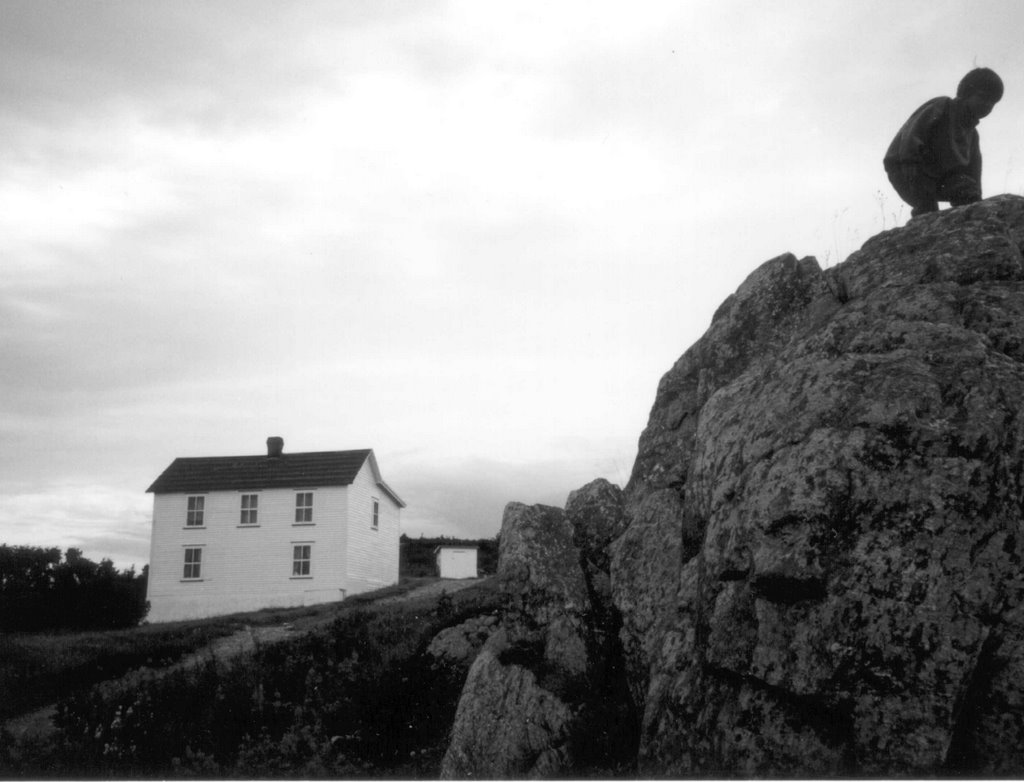
(photo:alison dyer)
Summer studies 1
The children smell of bogwater, spruce bark, wild rose pollen,
pondering equators around planets, fishing questions
scrambling over brambly land,
at night watching slugs mate and stars shoot.
2005 Alison Dyer
I began summer with a night paddle on the solstice in Conception Bay and closed it with a night paddle on the equinox in St. Mary's Bay. Both times we were fortunate to see brilliant bioluminescence. If you've ever paddled in this stuff, seen how it makes fireballs of your paddle blades, and creates streamers of greenish lights as the bow of your kayak breaks the surface, you'll know how magical it appears.
Friday, September 22, 2006
At The Door of the Dragon


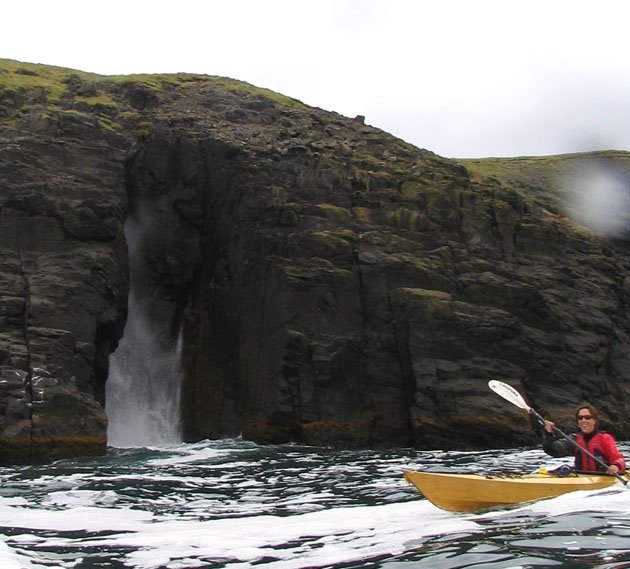
waterfall & cave; cave (photos : Neil Burgess)

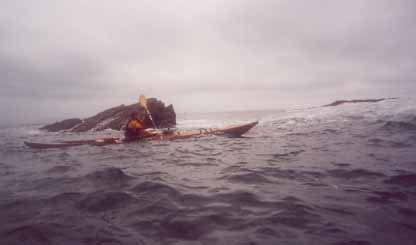
waterfall; a swell time (photos: Alison Dyer)
 another cave (photo: Neil Burgess)
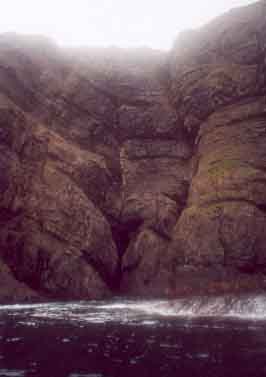
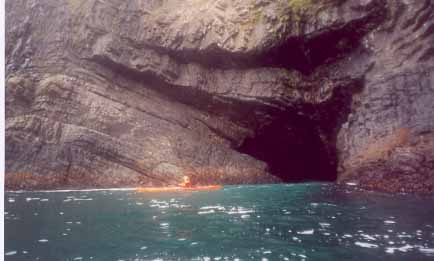
a 3rd cave, a 4th cave! (photos: Alison Dyer)
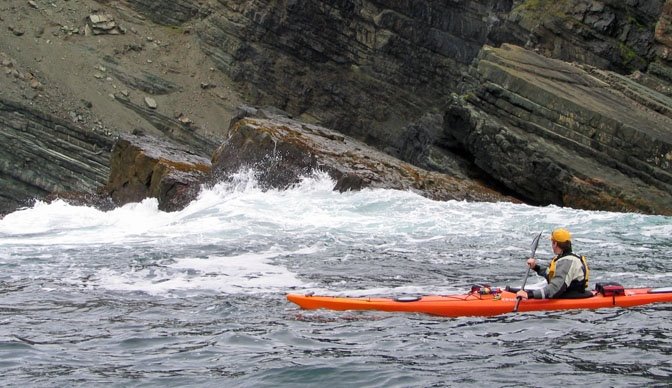 boomer; swell play (photos: N.Burgess)
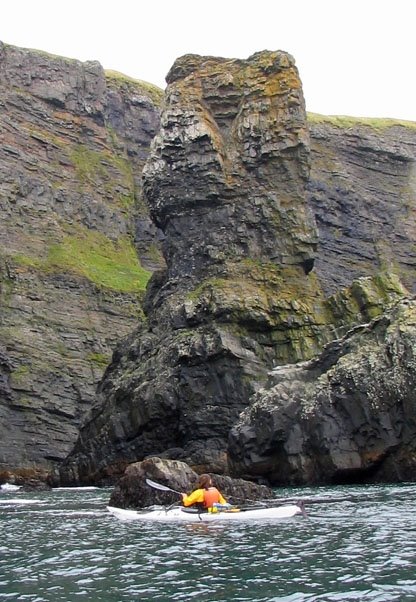
alison before the stack (photo: Neil Burgess)
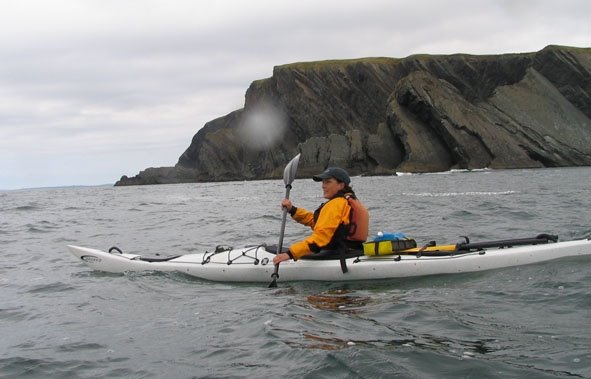
starting out (photo: Neil Burgess)
For more images, see kayak the rock (go to gallery, click on Neil's St. Vincent's images)
Paddled around Cape English in St. Mary’s Bay, Newfoundland, this past Sunday. Opposite the legendary Cape St. Mary’s. A metre or so of swell with some rebound going out but after rounding the cape, the magic began.
There was an Easter Island quality to the monumental cliffs, steeply dipping beds eroded in large statuesque stacks. (Pat made reference to the Lord of the Rings set.) A huge shining guano rock pulsed out a squadron of elegant cormorants. Enticing rock gardens rose and fell several feet and provided lots of fun. Boomers, blowholes and spouts animated the entire cliffscape. At one, we knew we were at the door of the dragon. Sucking in the swell and spouting out a cloud of spray in a deep sonorous tone. Not far away, another wall revealed an enormous atrium, steeply sided and narrowing toward a dark square cave that seem to go on forever. Pat had a bit of a scare when, exploring the inside, a good swell rumbled down the narrow passage and caught him in the cave.
Outside again, we scared a herd of sunning seals who slipped from their rocks into the water. An osprey glided over the bright green meadow cliff tops. We all agreed it reminded us of the coast of Ireland. Farther on, we almost bumped into a docile sun fish.
This paddle – from its surf launch at St. Vincent’s, to its millpond conclusion at St. Mary’s – was a dream. Pat said it rivaled Chance Cove, and Neil compared it to Little Passage on the south coast. Debbie had a coast to coast grin and Isabelle couldn't get enough play around the rocks. Neither Easter Island, New Zealand, or Ireland, we just found Paradise.
Subscribe to:
Posts (Atom)